Last Call at Liwei: The Quiet Regulars Who Show Up Just Before the Shade Comes Down
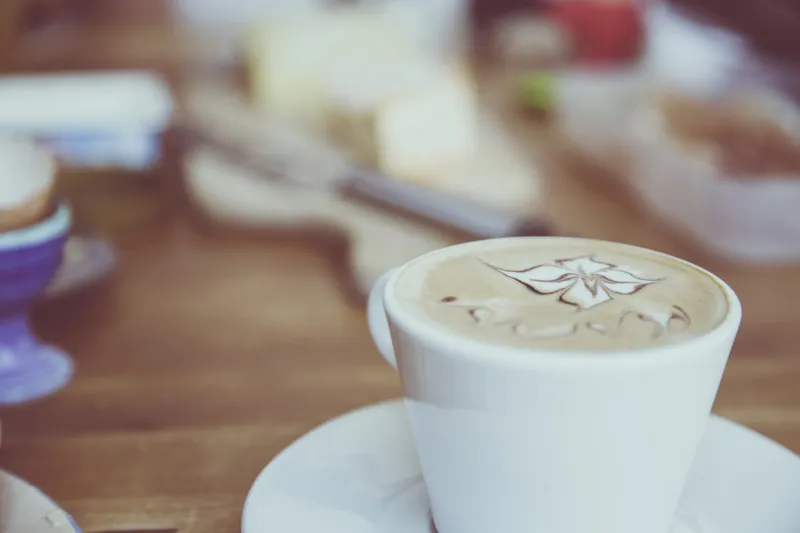
Photo: Markus Spiske, CC BY 2.0, via Wikimedia Commons
On a wet Tuesday in January 2026, a nurse in faded scrubs pushed through the door at 5:52 p.m., looked at the board a beat too long, and ordered a small drip with room for nothing. She didn't apologize for coming in late. She didn't ask whether we were closing. She just stood at the window, cupped her hands around the cup, and exhaled like she'd been holding her breath since 7 a.m.
That was the first entry in what we started calling the last-call log — a loose, unscientific tally of who comes through the window in the final ten minutes before we pull the shade. We didn't set out to study closing time. We just noticed that the same kind of person kept showing up at the same kind of hour, and we wanted to remember them.
The Second Opening
Most coffee stands have two personalities. Ours has a third. The morning rush is loud and horizontal — commuters trading news, dogs tangling leashes, someone always asking whether the cold brew is ready yet. The mid-afternoon lull is soft and vertical — people standing with laptops, waiting out a meeting, ordering a chai they'll nurse for an hour.
Then there's the last ten minutes. It isn't a rush. It isn't a lull. It's a landing. The door opens slower. The orders get smaller. The voices drop half a register. If the morning window is a handshake and the afternoon window is a nod, the last ten minutes are a hand on the shoulder.
Who Comes at the Edge of Closing
The nurse is a regular now. So is a parent who slips in before school pickup, still wearing a lanyard from work, ordering a decaf latte and a box of milk. There's a night student who needs one more cup before a 6:30 class and always asks whether we have anything with a little less caffeine. There's a delivery driver who times his last stop to our last hour. There's a man who walks his dog past the window every evening and only comes in when the weather turns.
They don't look like each other. They don't order the same drinks. But they share a posture — a certain looseness in the shoulders, a willingness to wait an extra minute, a habit of saying thank you twice.
The Common Thread: Permission to Stop
After a few months, we started noticing what the last orders had in common. They were rarely large. They were rarely iced. They were often decaf, or tea, or a single shot with a splash of milk. Nobody was optimizing for a jolt. They were optimizing for a pause.
The last cup of the day is a hinge. It's the thing you hold while you transition from one version of yourself to another — from employee to parent, from student to commuter, from caretaker to person who gets to sit down. The people who come at 5:55 aren't trying to be seen. They're trying to land. We started calling that final window shift the landing window, at least among ourselves.
How Closing Changed
We used to start breaking down at 5:45. Urns rinsed, pastry case wrapped, chairs stacked with more noise than necessary. It wasn't rude — it was efficient. But efficiency and hospitality don't always share a table.
Now we wait. We keep one urn hot and one pitcher of milk steamed until the sign flips. We leave the pastry case open a few minutes longer. We dim the lights but don't kill them. After 5:30, we switch the playlist to something quieter — no drums, no anthems. We stack chairs gently. We changed the small sign on the door from "Closing Soon" to "Still Here Until 6." It sounds like a tiny thing. It changed the room.
The last ten minutes are not a countdown anymore. They're part of the service.
The Softest Conversations
People tell us things at 5:58 they wouldn't dream of saying at 8 a.m. A nurse describes a shift that went sideways. A parent admits they haven't eaten since breakfast. A student says they're thinking about changing majors. A driver says they're moving out of state next month. We don't pry. We don't take notes. We just listen and steam the milk.
The window becomes a kind of confessional without the booth. There's no line behind them. There's no audience. The espresso machine is off. The only sound is the fridge hum and the occasional car passing. It turns out that the last ten minutes are the easiest time to be honest, because nobody's in a hurry to be anywhere else.
Pulling the Shade
Our closing ritual used to be a checklist. Wipe, count, flip, lock. Now it's slower. We leave the shade up until a few minutes past six. We wave at the regulars who pass by on their way home. We sweep the sidewalk and say goodnight to the block.
The last ten minutes taught us that closing isn't an ending. It's a handoff. The neighborhood goes home, and we get to be the last lit window on the street. That's not a bad thing to be.