Six Pairs of Hands: Following One Bag of Colombian Beans All the Way to Liwei's Counter
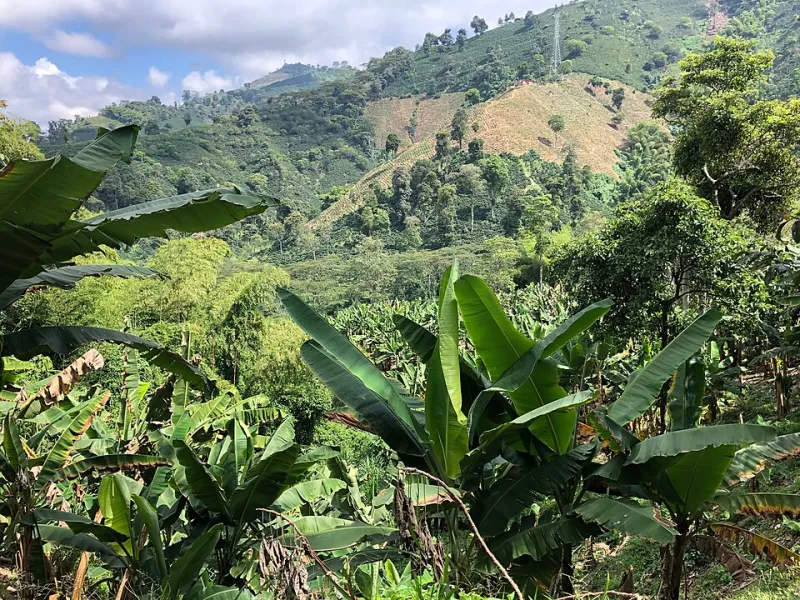
Photo: Paul from Hacketts Cove, Canada, CC BY 2.0, via Wikimedia Commons
There's a bag of beans sitting in our hopper right now that started its life on a steep hillside in Huila, Colombia — a region you'd recognize from the postcards: red volcanic dirt, banana trees shading the coffee, mist that rolls in every afternoon like it's on a schedule.
By the time that bag reaches your hand at our counter, six different people will have touched it. We thought you'd want to meet them.
Hand #1: The Grower
Doña Esperanza has farmed coffee on her family's plot for thirty-one years. Her farm is small — about three hectares — which is typical for Huila, where most coffee comes from growers working land you could walk in twenty minutes.
She picks only the deep-red cherries, and only by hand. A mechanical harvester can't navigate her hillside, but honestly, she wouldn't use one anyway. "The tree tells you what's ripe," she told us over a WhatsApp voice note (technology has its uses). "You just have to listen."
What freshness means here: Everything. Coffee cherries are picked at peak ripeness, then washed and dried within hours. The moment of picking is the freshest the coffee will ever be — everything after is a slow, careful negotiation with decay.
Hand #2: The Exporter
Once Esperanza's dried parchment coffee is graded and bagged, it heads to a dry mill near Medellín, where Andrés oversees export logistics. His job sounds boring until you realize he's essentially a customs whisperer, quality-control inspector, and shipping coordinator all at once.
Andrés checks moisture levels (we aim for 10–12%), cupps samples from every lot, and books the green coffee onto a ship out of Cartagena. From farm to our roaster, this leg takes roughly six to eight weeks by sea.
What freshness means here: Green coffee is remarkably stable — that's the whole point of shipping it unroasted. A well-stored bag of green beans can rest quietly for months without losing its soul. This is the supply chain's secret weapon: all the freshness drama happens after roasting, so exporters protect the beans like it's their job. Because it is.
Hand #3: The Roaster
Marcus roasts for us every Tuesday and Thursday in small batches, and he treats the roaster like an instrument. Our Huila lot gets a medium roast — long enough to develop the chocolate and caramel notes the region is known for, short enough to keep the bright red-apple acidity that made us fall for it in the first place.
Marcus's rule: "You're not cooking the flavor in. You're keeping it from escaping."
What freshness means here: This is where the clock starts ticking. Roasted coffee is at its best roughly five to fourteen days after roast day — enough time for CO2 to off-gas, but before the aromatics fade. That's why we date every bag and why we roast small. Big batches look efficient; they just aren't fresh.
Hand #4: The Grinder
That's Rosa, our morning barista, and yes — grinding counts as a whole pair of hands, because it's the second-most-destructive thing that happens to a bean. Grind coffee and you've multiplied its surface area a hundredfold, exposing all those lovely aromatics to oxygen at once.
Rosa grinds to order, every single time. It takes eleven extra seconds. She thinks it's worth it, and so do we.
What freshness means here: Ground coffee starts losing noticeable flavor within fifteen to twenty minutes. If you buy beans from us, ask us to grind them — but only if you're brewing them that day. Otherwise, take them whole and grind at home. Your kitchen will smell amazing.
Hand #5: The Barista
Rosa again — double duty on this batch. She pulls the shot at 200°F, watches the stream turn from dark to honey-colored, and calls it done at about 27 seconds. She adjusts the grind if the humidity's shifted, tastes the dial-in shot herself before serving a customer, and pours a latte heart that's honestly a little show-offy.
What freshness means here: Freshness in the cup is a moving target. Beans two weeks off roast need a slightly different grind than beans five days off roast. A good barista isn't following a recipe — they're responding to what the coffee is doing today.
Hand #6: You
Here's the part nobody tells you: you're not just the customer. You're the final step in the supply chain, and the coffee doesn't care what happened in Colombia if it sits in your cabinet next to the toaster for three months.
A few things worth knowing:
- Buy whole bean, grind at home. We'll say it as many times as it takes.
- Use it within a month of the roast date, not the vague "best by" date.
- Keep it sealed, cool, and dry — the bag's one-way valve exists for a reason, so skip the fancy airtight canister unless it has a valve too.
- Don't freeze your daily beans. Freezing works for long-term storage, but repeatedly opening the bag defeats the purpose.
Why We Bother Telling You All This
Because a cup of coffee is a small miracle of coordination. A woman on a Colombian hillside listened to her trees. A logistics guy in Medellín fought paperwork on your behalf. Marcus listened to the roaster. Rosa listened to the shot. All so you could take one sip on a Tuesday morning and think, huh, that's good.
That's the whole journey. Six pairs of hands, one cup. See you at the stand.