The Tab on the Wall: One Month of Coffee Paid Forward at Liwei
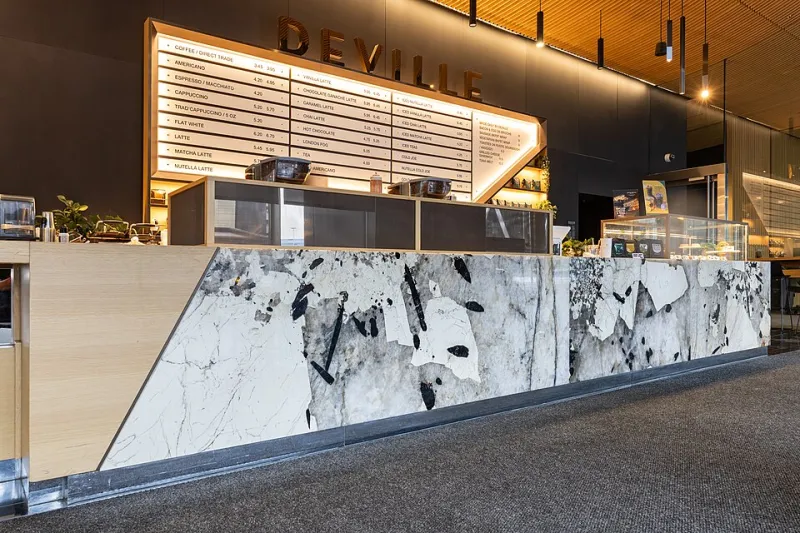
Photo: Chris Woodrich, CC BY-SA 4.0, via Wikimedia Commons
At Liwei Coffee Stand, we have a soft spot for small systems. A punch card, a name remembered, a dog bowl by the door. So when a regular asked in early October if she could buy a coffee for whoever came next, we said yes—and then immediately worried we had invented a problem. A month later, we have a notebook full of crossed-out lines and a few opinions about generosity at a coffee window.
The Rule We Wrote on an Index Card
We called it the tab on the wall, not a promotion. The rules fit on one index card: one prepaid drink equals one mark, up to $5; no names required; no stories attached; no change owed; no IOUs; staff offer the tab only when it fits the moment. We kept the ledger in a cheap notebook behind the register—date, amount in, amount out, initials. No app. No spreadsheet. The point was not to scale it. The point was to keep it honest.
Who Put Money In
The first prepay came from a woman who gets a drip and a splash of whole milk every weekday. She handed over $25 and said, make it five cups. A construction foreman put in $10 on a Friday and told us not to make a thing of it. A teacher bought three cups on a rainy Tuesday because, she said, the block looked tired. One person put in $2—all the cash in his pocket—and we made it a half-cup credit toward the next prepay. That felt right. Generosity does not have to arrive in neat $5 bills.
The Awkward Part
Here is what nobody tells you about pay-it-forward coffee: the hard part is not the ledger. It is the language. Our first script was too eager. We would say, someone bought you a coffee today, and watch a person's face do something complicated. Pride, suspicion, gratitude, irritation. One man asked who paid. We said anonymous. He asked again. We said we do not keep names on the out side. He paid for his own coffee and left. That was a lesson. We were not running a charity. We were running a window, and a window should not make anyone feel inspected.
We changed the offer: We have a few cups on the tab today. Would you like yours covered? No explanation. No pity. No guess about who needs it. Anyone can say yes. Anyone can say no. Staff do not choose recipients by appearance or vibe. They offer at a natural pause—after the order, before the payment—and then let it go. If someone says no, we mark nothing and move on. The notebook stays boring. Boring is good.
The Double-Mark Problem
We messed up. Twice. Once a barista forgot to cross out a line and a cup got redeemed twice. Once a regular prepaid $10 but we wrote $15. We caught both at close, but it taught us to keep the ledger simple: one line in, one line out, initials. We count the tab at open and close. If the math is off, we say so on the card. No hiding. A suspended cup ledger is a trust exercise, and trust does not survive fuzzy bookkeeping.
What the Regulars Taught Us
The people who prepaid did not want a wall of fame. They wanted a small valve. A way to do something nice without a ceremony. The people who redeemed mostly said thank you and went on with their day. A few asked if they could pay it back later. We said the tab does not work that way, but they were welcome to put a cup in for someone else when they were ready. That felt like the whole point: not a debt, a loop.
One regular who prepaid $20 watched the notebook for a week and got quietly disappointed that no one had taken a cup. We had to explain that the tab is not a vending machine. Some days it moves. Some days it sits. Generosity with a scoreboard is not generosity. It is marketing.
What We Would Keep
If we run the tab again—and we probably will, maybe for a week in December—we will keep the index card rules, the $5 cap, and the neutral script. We will not post names. We will not tell redemption stories that make anyone recognizable. We will not let the tab grow past ten cups, because a huge balance starts to feel like a program instead of a habit. And we will keep the notebook behind the register, where it belongs: close to the cash, close to the coffee, close to the people.
The tab on the wall is empty now. That is fine. A good window does not need a permanent promotion. It needs a way for a neighbor to hand something forward without making a speech. We have that now. It is a cheap notebook and one index card. It works.