Seven Mornings With a Sullen Bag: Dialing In Coffee That Smelled Like a Winner and Tasted Like Nothing
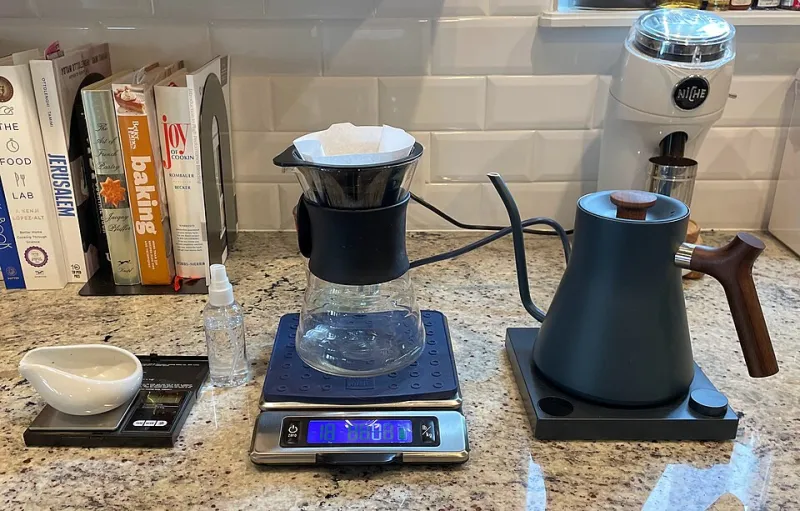
Photo: Cerebral726, CC BY-SA 4.0, via Wikimedia Commons
The bag smelled like brown sugar and orange peel. It was a washed Colombian, medium roast, and the first cup tasted like almost nothing—thin body, a bitter edge, a finish that vanished. We did not want to pull it from the menu. We wanted to understand it. So we kept a seven-morning diary at the window.
The Setup
The coffee was roasted nine days before we opened it. We brewed on a V60 at the stand: 24 grams coffee, 384 grams water, 200°F, medium grind, 45-second bloom, 2:45 target. The first cup was flat. Not sour, not ashy. Just quiet. We wrote: smells like orange, tastes like paper.
Morning 1: The Grind Adjustment
Our first move was the obvious one: grind finer. We went two clicks finer on the stand grinder. The cup got more body, but the finish turned harsh and drying. We wrote: more texture, less sweetness, bitter at the back of the tongue. That was useful. Flat and bitter are not always opposites. Sometimes they are the same problem wearing different coats.
Morning 2: Dose and Ratio
We bumped the dose to 26 grams and kept the water at 400 grams—a 1:15.4 ratio. The cup was heavier and sweeter up front, but the finish still fell off a cliff. We wrote: brown sugar for two seconds, then nothing. We were chasing body with more coffee. It helped a little. It did not solve it.
Morning 3: Water Temperature
We dropped the temperature from 200°F to 196°F. This was the first real turn. The bitterness softened. The orange note came forward. The cup still was not impressive, but it was pleasant. We wrote: orange peel, cocoa, clean finish, still quiet. We kept the lower temp and moved on.
Morning 4: The Rest Test
By the fourth morning the beans were twelve days off roast. We brewed the same recipe—26 grams, 400 grams water, 196°F, medium-fine—and the cup was better. Not dramatically. The sweetness had a little more room. We wrote: the bag needed air, but air was not the whole story. Rest matters. It is not magic.
Morning 5: The Grinder Problem
On the fifth morning we noticed something dumb: the stand grinder had been producing more fines than usual. We had cleaned it two weeks earlier, but the burrs were dusty and the calibration was off. We cleaned the grinder, recalibrated, and brewed again. The cup was cleaner. The bitterness we had been fighting was partly grinder dust and misalignment, not the coffee. We wrote: check your equipment before you blame the bean.
Morning 6: The Recipe That Worked
Our final recipe was not dramatic: 26 grams, 400 grams water, 197°F, medium-fine grind, 45-second bloom, 2:40 total. Tasting notes: dried orange, cocoa, a little brown sugar, clean finish. It was not a stunner. It was a good cup. At the window we served it as a limited pour-over and told people it was a quieter coffee. Some liked it. One regular said it was smooth. Another said it was still a little shy. We agreed.
Morning 7: The Decision
We did not put the whole batch on the main menu. We used part of it for milk drinks, where its cocoa note had somewhere to go, and kept a small pour-over option for people who wanted something gentle. The bag that smelled like a winner became a supporting player. That is not a failure. That is a roast doing one thing well and another thing quietly.
What We Would Tell Home Brewers
If a bag smells great and tastes flat, do not start by adding more coffee. Check your grind, your water temperature, and your grinder. Keep a log: dose, water, temperature, grind, time, and three taste words. Change one variable at a time. Clean your equipment. Give beans a few days to rest, but do not worship the calendar. And remember that a coffee can be good without being a headline. The stubborn batch taught us more than a perfect one would have.